
Daniel Madariaga. In response to the massive invasion of sargasso on the coasts of Nayarit, Baja California, and the Mexican Caribbean, an innovation has emerged that transforms the problem into an opportunity: seaweed-based ecological bricks. This development has social, economic, and environmental impact and is already changing the way we build in Mexico.
Every year, thousands of tons of seaweed—a floating brown macroalga rich in nutrients—invade Mexico’s coasts, causing environmental, tourist, and health impacts. In 2024 alone, over 37,000 tons were collected in Quintana Roo, a 60% increase compared to the previous year. By mid-2025, between 41,000 and 45,000 tons have already been removed, with daily beach landings of up to 70 tons in areas like Mahahual and Xcalak.
As it decomposes, this algae consumes oxygen and releases hydrogen sulfide (H₂S), severely affecting marine ecosystems, particularly coral reefs, seagrass beds, and coastal fauna, while also posing a risk to human health. The use of heavy machinery to remove it also threatens dunes and seagrass meadows, resulting in double environmental harm.
Sargasso Bricks: An Innovation in Construction
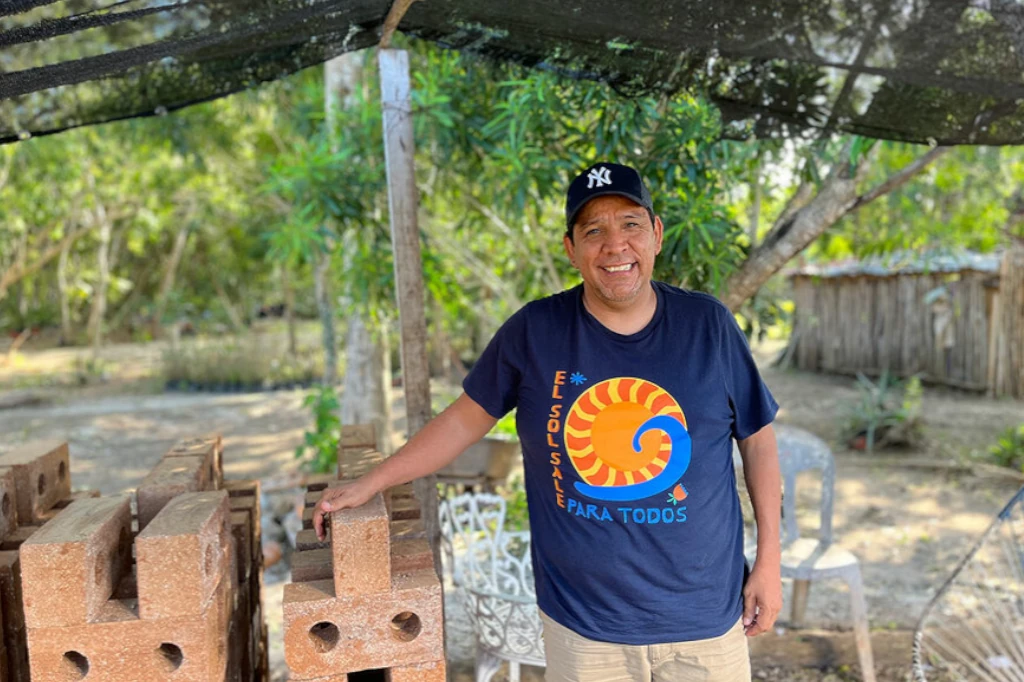
Mexican companies like Blue Green México and Sargablock are developing building blocks made from 40% to 70% sargasso, combined with other organic materials and compacted using techniques similar to adobe.These blocks offer:
- Strength: Comparable to traditional adobe, supporting between 75 and 120 kg/cm².
- Durability: Estimated to last up to 120 years.
- Natural Thermal and Acoustic Insulation: Thanks to the properties of seaweed.
- Elimination of Marine Odor: Through dehydration, crushing, and compacting.
- Economical and Accessible: Each block costs approximately 10 to 12 pesos, making it 30% to 50% cheaper than traditional bricks.
- With just 20 tons of seaweed, enough blocks can be made to build a 40 m² home, costing between 150,000 and 200,000 pesos, including materials and labor.
Projects and Expansion
In 2018, Blue Green México inaugurated the first home built entirely with Sargablock, known as “Casa Angelita” (<40 m²). Currently, they are opperating more than five plants in Puerto Morelos and Mahahual, with plans to expand to Playa del Carmen, Tulum, Cozumel, and beyond.
Blue Green México has already donated homes to vulnerable families, including individuals in special conditions or recovery. The project has been recognized by international organizations, such as the UNDP Accelerator Labs, which highlighted it in their global innovation network.
Thanks to its adobe-like method, the system has garnered attention from other countries facing similar seaweed problems, like Belize, the Dominican Republic, Puerto Rico, and even Malaysia. In Mexico, production of materials for community-based infrastructures, such as migrant shelters and sustainable tourism developments, have already begun.
Why is this innovation crucial?
- Transforms an environmental problem into a useful raw material.
- Reduces construction costs by up to half, making dignified housing more accessible.
- Supports coastal ecosystems by integrating responsible seaweed recollection.
- Promotes circular economy and local labor.
- Offers a scalable and replicable solution for multiple tropical regions.
Seaweed bricks represent an innovative solution to the invasive algae problem in Mexico. With blocks that cost between 10-12 pesos, that have proven their strength and thermal benefits, this ecological and affordable construction model is already making a social and environmental impact. From 40 m² homes to community projects, this technology transforms millions of tons of seaweed into real opportunities. A circular innovation story that Nayarit—and the entire country—should boost.
From vertical farming to green mobility, Daniel Madariaga drives sustainable change in Mexico. An EGADE graduate, he leads efforts in ecological innovation, recycling, and responsible tourism.
👉 Check out this recommended article we think you’ll love: