

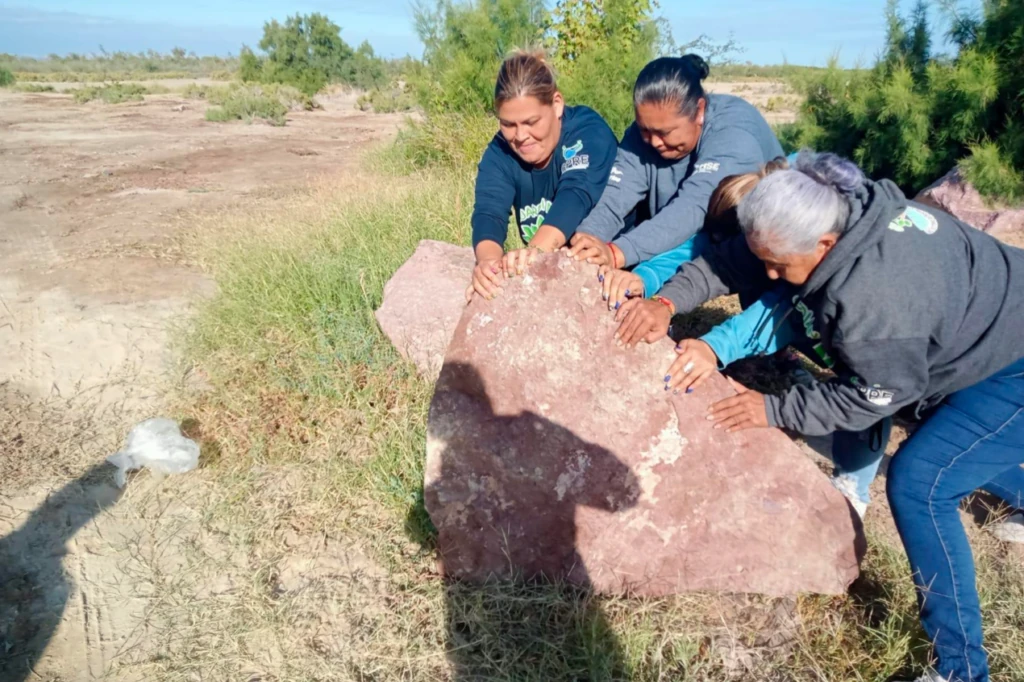
Daniel Madariaga. In one of the coastal areas most affected by urbanization in northwestern Mexico, a group of twelve women decided to change the environmental history of their community. Known as Las Guardianas del Conchalito, they have been leading one of the most emblematic citizen initiatives for ecological restoration and women’s empowerment in the country since 2017.
The El Conchalito estuary, located in La Paz Bay, is a wetland that suffered for decades from garbage accumulation, sewage discharge, mangrove logging, and poaching. Faced with this deterioration, this group of women—including fisherwomen, housewives, and community leaders—decided to take action.
With support from organizations such as Noroeste Sustentable, WildCoast, and Costasalvaje, Las Guardianas began rehabilitating the estuary through cleanup efforts, reforestation with native species, and construction of a mangrove nursery that now supplies degraded areas. Their achievements include opening a 46-meter canal to reconnect the mangroves to the sea, a vital step in their natural regeneration.
At the same time, the Guardianas have promoted productive projects, such as an oyster workshop and sustainable scallop aquaculture. These projects have provided the women with decent incomes and economic autonomy.
In addition to restoring the ecosystem, the Guardians patrol the area, report illegal activities, and educate their community about the importance of mangroves as natural barriers against climate change, biodiversity refuges, and carbon sinks.
Female leadership with a regenerative vision
The work of Las Guardianas del Conchalito has transcended their community. Today, they are an example of how female leadership can build solutions from the local level with an environmental and social focus.
In the next phase, the collective is planning to open the estuary to educational and regenerative tourism. They will offer guided tours, environmental workshops, and tastings of sustainably harvested seafood.
The case of Conchalito is relevant not only for its ecological impact. It also represents a profound transformation in how the role of women in conservation is understood. This model can be replicated in other regions of Mexico where coastal ecosystems are at risk and communities are willing to take action.
In a context where mangrove loss is advancing at a rate of 1.3% per year, according to data from UNAM and CONABIO, projects like this offer concrete responses to the climate and social crisis.
Las Guardianas del Conchalito prove that regenerating the environment and strengthening the social fabric is possible when solutions originate from the community, are implemented locally, and are guided by a long-term vision and commitment to life.
Daniel Madariaga, an EGADE-educated entrepreneur from Mexico, pioneers’ sustainable innovation. His work includes vertical farming, eco-mobility, green construction, food recovery, and responsible tourism.
👉 Check out this recommended article we think you’ll love: Danie Madariaga on how Aquaponics are the ecological revolution for profitable crops