

Tag: Nayarit

  • Seaweed bricks: an ecological and economic solution to the invasive algae on Mexican coasts, by Daniel Madariaga

    Seaweed bricks: an ecological and economic solution to the invasive algae on Mexican coasts, by Daniel Madariaga

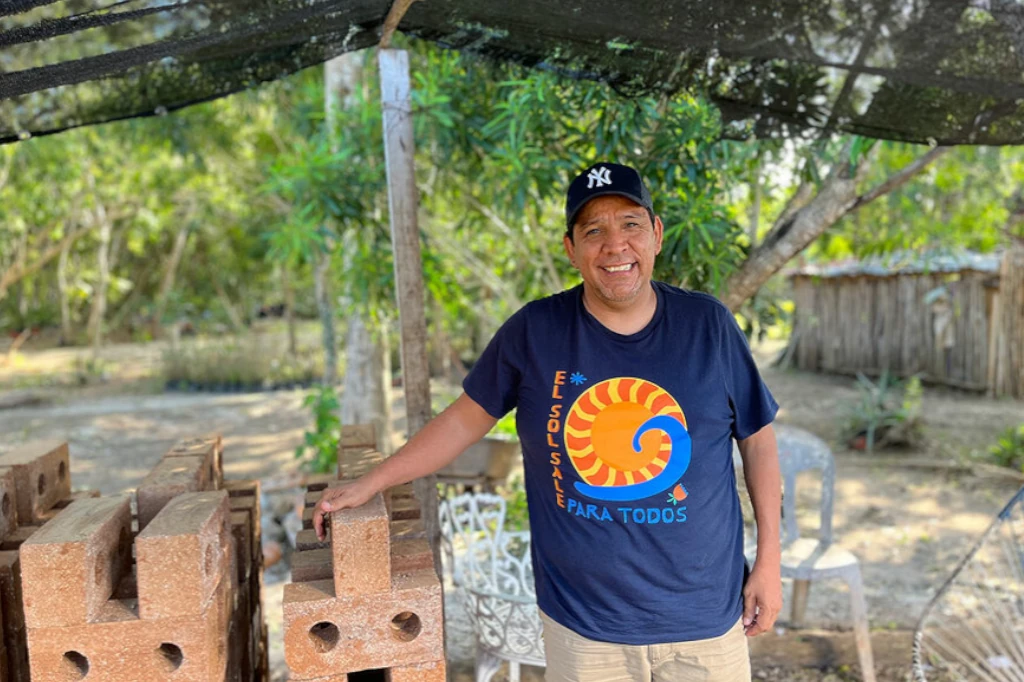
    Daniel Madariaga. In response to the massive invasion of sargasso on the coasts of Nayarit, Baja California, and the Mexican Caribbean, an innovation has emerged that transforms the problem into an opportunity: seaweed-based ecological bricks. This development has social, economic, and environmental impact and is already changing the way we build in Mexico.

    Every year, thousands of tons of seaweed—a floating brown macroalga rich in nutrients—invade Mexico’s coasts, causing environmental, tourist, and health impacts. In 2024 alone, over 37,000 tons were collected in Quintana Roo, a 60% increase compared to the previous year. By mid-2025, between 41,000 and 45,000 tons have already been removed, with daily beach landings of up to 70 tons in areas like Mahahual and Xcalak.

    As it decomposes, this algae consumes oxygen and releases hydrogen sulfide (H₂S), severely affecting marine ecosystems, particularly coral reefs, seagrass beds, and coastal fauna, while also posing a risk to human health. The use of heavy machinery to remove it also threatens dunes and seagrass meadows, resulting in double environmental harm.

    Sargasso Bricks: An Innovation in Construction

    Mexican companies like Blue Green México and Sargablock are developing building blocks made from 40% to 70% sargasso, combined with other organic materials and compacted using techniques similar to adobe.These blocks offer:

    • Strength: Comparable to traditional adobe, supporting between 75 and 120 kg/cm².
    • Durability: Estimated to last up to 120 years.
    • Natural Thermal and Acoustic Insulation: Thanks to the properties of seaweed.
    • Elimination of Marine Odor: Through dehydration, crushing, and compacting.
    • Economical and Accessible: Each block costs approximately 10 to 12 pesos, making it 30% to 50% cheaper than traditional bricks.
    • With just 20 tons of seaweed, enough blocks can be made to build a 40 m² home, costing between 150,000 and 200,000 pesos, including materials and labor.

    Projects and Expansion

    In 2018, Blue Green México inaugurated the first home built entirely with Sargablock, known as “Casa Angelita” (<40 m²). Currently, they are opperating more than five plants in Puerto Morelos and Mahahual, with plans to expand to Playa del Carmen, Tulum, Cozumel, and beyond.

    Blue Green México has already donated homes to vulnerable families, including individuals in special conditions or recovery. The project has been recognized by international organizations, such as the UNDP Accelerator Labs, which highlighted it in their global innovation network.

    Thanks to its adobe-like method, the system has garnered attention from other countries facing similar seaweed problems, like Belize, the Dominican Republic, Puerto Rico, and even Malaysia. In Mexico, production of materials for community-based infrastructures, such as migrant shelters and sustainable tourism developments, have already begun.

    Why is this innovation crucial?

    • Transforms an environmental problem into a useful raw material.
    • Reduces construction costs by up to half, making dignified housing more accessible.
    • Supports coastal ecosystems by integrating responsible seaweed recollection.
    • Promotes circular economy and local labor.
    • Offers a scalable and replicable solution for multiple tropical regions.

    Seaweed bricks represent an innovative solution to the invasive algae problem in Mexico. With blocks that cost between 10-12 pesos, that have proven their strength and thermal benefits, this ecological and affordable construction model is already making a social and environmental impact. From 40 m² homes to community projects, this technology transforms millions of tons of seaweed into real opportunities. A circular innovation story that Nayarit—and the entire country—should boost.

    From vertical farming to green mobility, Daniel Madariaga drives sustainable change in Mexico. An EGADE graduate, he leads efforts in ecological innovation, recycling, and responsible tourism.

    👉 Check out this recommended article we think you’ll love:
  • Regenerative tourism and biocultural gastronomy: the key to sustainability in Nayarit, according to Daniel Madariaga

    Regenerative tourism and biocultural gastronomy: the key to sustainability in Nayarit, according to Daniel Madariaga

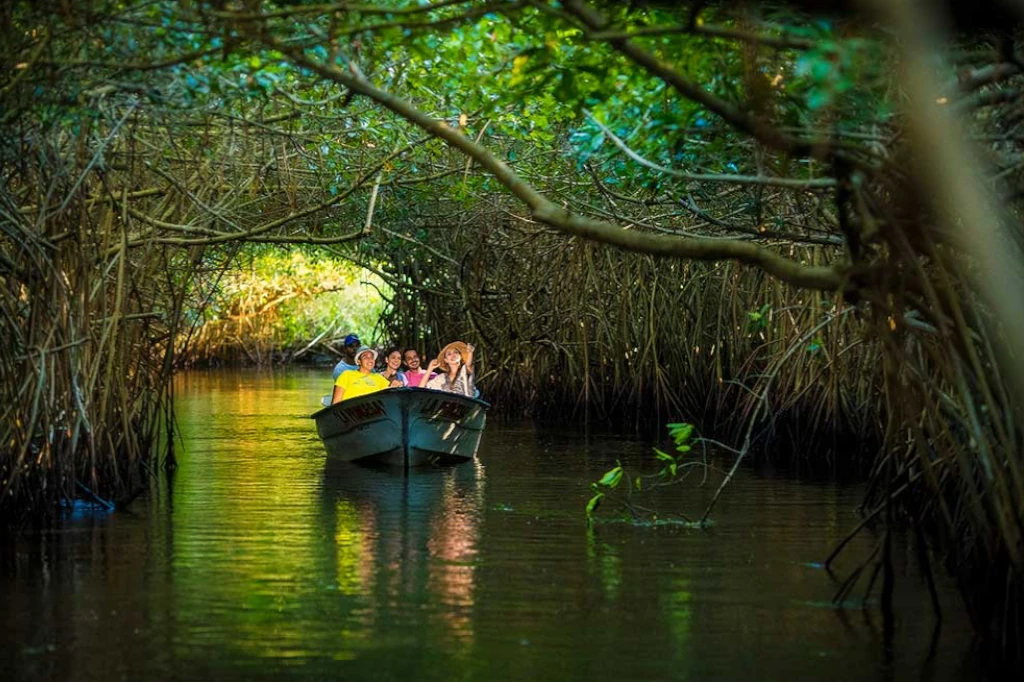
    Daniel Madariaga. Over the last decade, the conversation about sustainability in global tourism has gained momentum. However, some regions are not only seeking to conserve, but also to regenerate. Nayarit, located on Mexico’s Pacific coast, is positioning itself as a pioneer in regenerative tourism. The state is doing so by integrating practices that restore ecosystems, strengthen the social fabric, and promote a new ethic for tourist destinations.

    From sustainability to regeneration: the new paradigm

    Unlike sustainable tourism, which seeks to minimize impact, regenerative tourism actively contributes to the revitalization of the natural and cultural environment. Nayarit is applying this concept with concrete actions.

    In the first five months of 2024, hotel occupancy in the Riviera Nayarit region reached 81.8%, making it one of the most popular destinations in the country. Behind this encouraging figure, however, lies a silent and profound transformation: tourism in Nayarit is beginning to generate life as well as profits.

    Some examples of how different sectors are coordinating efforts to turn tourism into a positive catalyst:

    • Protection of natural areas: Hotels such as the St. Regis and W Punta de Mita are working alongside federal authorities to regulate access to the Marietas Islands, reducing human pressure on reefs, seabirds, and mangroves.
    • Environmental art and circular economy: On beaches such as Sayulita, Guayabitos, and La Cruz de Huanacaxtle, artistic projects repurpose plastics collected during beach cleanups to create community murals, raising ecological awareness and encouraging local participation.
    • Boosting communities: Over 130 fishing cooperatives have been incorporated into sustainable tourism value chains to promote fair trade and prevent the overexploitation of marine species.
    • Hotel eco-innovation: A study performed on 226 hotel employees in Nuevo Nayarit found that implementing eco-innovations such as clean energy, water management, and bioclimatic architecture improves hotels’ sustainable performance and raises awareness among workers and guests.

    Tourism with a human face

    One of the key pillars of regenerative tourism in Nayarit is the active inclusion of indigenous and rural communities as key drivers of development.. In the Sierra del Nayar, for example, the Wixárika (Huichol) culture offers visitors an authentic experience of reconnecting with nature, spirituality, and the local worldview.

    In Nayarit, regenerative tourism is not just a concept; it’s a reality. It involves integrating communities as protagonists of development, not merely as service providers, and placing ecological restoration at the heart of the experience.

    These experiences go beyond recreation—they are educational, transformative, and deeply human.

    An economic and environmental model that delivers results

    Recent data reveals that Nayarit attracts over three million visitors annually, generating more than 9 billion pesos in revenue. However, what stands out is that this tourism growth is increasingly aligning with principles of conservation, restoration, and social equity. This shift is largely due to public policies that have allocated more than 700 million pesos (2024–2026) to enhance green infrastructure, promote sustainable mobility, and strengthen local culture.

    Moreover, the State Secretariat of Tourism reports that 72% of international visitors in 2024 expressed interest in engaging in low-impact, socially beneficial experiences, such as community workshops, interpretive hikes, or agroecological tours.

    Why Choose Nayarit?

    Because it is one of the few places in Mexico where tourism is leaving a positive and measurable impact. Here, every journey can become an act of conservation, every dish a celebration of cultural revival, and every interaction with a community a bridge toward mutual respect.

    Nayarit is building a new tourism model for the 21st century—one where regeneration is more valuable than exploitation, and where traveling is also an act of consciousness.

    If you’re planning your next trip, consider Nayarit not just as a destination, but as an opportunity to take part in a real transformation. Because now, more than ever, travel can—and must—be a way to heal the world.

    Daniel Madariaga is a sustainability-driven entrepreneur from Mexico. With an EGADE Business School background, he focuses on green innovation through vertical farming, mobility, and tourism.

    👉 Check out this recommended article we think you’ll love: Nayarit, a national benchmark in green mobility and biotechnology, by Daniel Madariaga

  • Nayarit, a national benchmark in green mobility and biotechnology, by Daniel Madariaga

    Nayarit, a national benchmark in green mobility and biotechnology, by Daniel Madariaga

    Daniel Madariaga. Nayarit is making steady progress toward a sustainable urban development model. In 2025, the state was selected by the Inter-American Development Bank (IDB) to conduct a Sustainable Mobility Study in the municipalities of Tepic and Bahía de Banderas—two of the state’s most dynamic areas in terms of population and tourism.

    The study’s main objective is to transform the public transportation system, optimize road infrastructure, and reduce travel times under an approach that guarantees mobility as a basic human right. The initiative includes participatory working groups with transportation operators, citizens, and social sectors to build a more inclusive, accessible, and efficient transportation system.

    The study’s findings will serve as a fundamental resource for designing public policies that promote resilient, environmentally friendly mobility, aligning with the Sustainable Development Goals of the 2030 Agenda, particularly SDG 11: Sustainable Cities and Communities.

    Rural biotechnology: Nayarit cultivates the future with spirulina

    Alongside its dedication to green mobility, Nayarit is establishing itself as a leader in agricultural biotechnology. The state is developing one of the country’s most ambitious projects focusing on the cultivation of spirulina algae, a superfood renowned for its high protein, iron, and antioxidant content.

    The state government and private companies are working together on an initial investment of 35 million pesos to install 100 hectares of spirulina cultivation on land that is not currently being used for agricultural production. These areas were chosen because of their ideal climatic conditions, including high sun exposure and stable temperatures throughout the year.

    According to the Food and Agriculture Organization of the United Nations (FAO), spirulina is one of the most sustainable food sources, requiring 10 times less water than traditional crops and doubling in volume in just 24 hours. In countries such as India and Chad, spirulina production has been essential for combating child malnutrition and generating local income.

    This project in Nayarit offers small landowners a technologically advanced alternative and seeks to strengthen the circular economy, reduce dependence on intensive crops, and establish the state as a national leader in biotechnology for healthy, sustainable food.

    Replicable strategies for the rest of the country

    The actions undertaken in Nayarit can serve as a model for other states facing similar challenges, such as insufficient urban infrastructure, underutilized agricultural land, and the need to generate sustainable jobs.

    Experts from the Mexican Institute for Competitiveness (IMCO) point out that states that invest in sustainable mobility and the bioeconomy have greater potential to attract foreign investment, reduce territorial inequalities, and meet international climate commitments.

    Given the growing challenges Mexico faces from climate change, water scarcity, and food insecurity, green mobility and biotechnological production strategies, like those in Nayarit, offer a path toward a more resilient, inclusive, and prosperous future.

    Mexican entrepreneur Daniel Madariaga blends business savvy with a passion for the environment. With a degree from EGADE, he drives initiatives in vertical farming, sustainable transport, green buildings, and inclusive recycling.

    👉 Check out this recommended article we think you’ll love: Danie Madariaga on how Aquaponics are the ecological revolution for profitable crops