

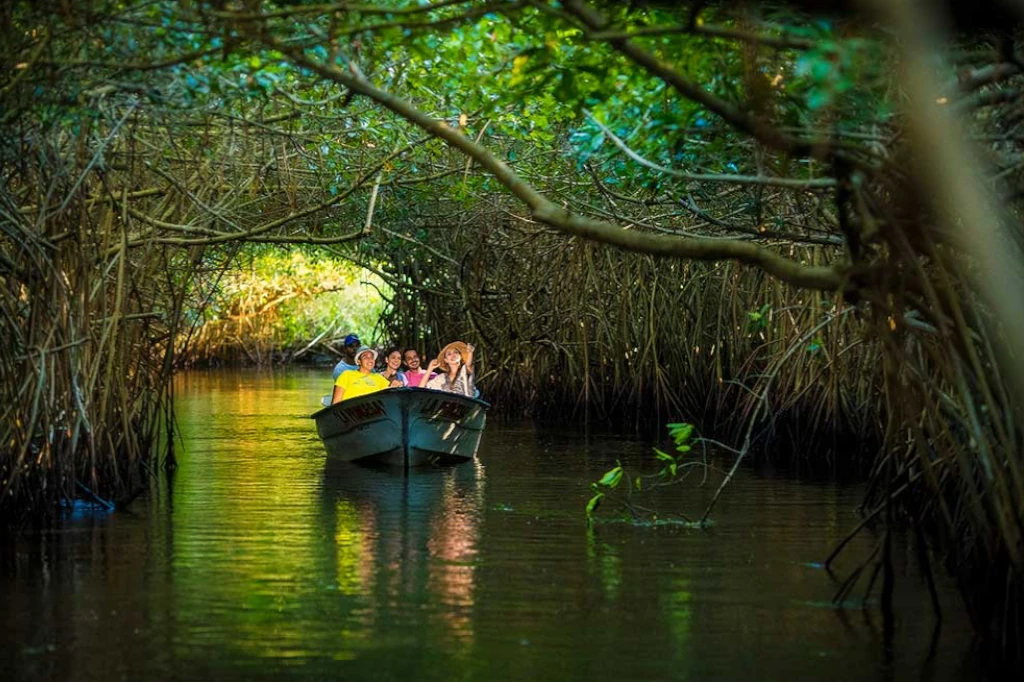
Daniel Madariaga. Over the last decade, the conversation about sustainability in global tourism has gained momentum. However, some regions are not only seeking to conserve, but also to regenerate. Nayarit, located on Mexico’s Pacific coast, is positioning itself as a pioneer in regenerative tourism. The state is doing so by integrating practices that restore ecosystems, strengthen the social fabric, and promote a new ethic for tourist destinations.
From sustainability to regeneration: the new paradigm
Unlike sustainable tourism, which seeks to minimize impact, regenerative tourism actively contributes to the revitalization of the natural and cultural environment. Nayarit is applying this concept with concrete actions.
In the first five months of 2024, hotel occupancy in the Riviera Nayarit region reached 81.8%, making it one of the most popular destinations in the country. Behind this encouraging figure, however, lies a silent and profound transformation: tourism in Nayarit is beginning to generate life as well as profits.
Some examples of how different sectors are coordinating efforts to turn tourism into a positive catalyst:
- Protection of natural areas: Hotels such as the St. Regis and W Punta de Mita are working alongside federal authorities to regulate access to the Marietas Islands, reducing human pressure on reefs, seabirds, and mangroves.
- Environmental art and circular economy: On beaches such as Sayulita, Guayabitos, and La Cruz de Huanacaxtle, artistic projects repurpose plastics collected during beach cleanups to create community murals, raising ecological awareness and encouraging local participation.
- Boosting communities: Over 130 fishing cooperatives have been incorporated into sustainable tourism value chains to promote fair trade and prevent the overexploitation of marine species.
- Hotel eco-innovation: A study performed on 226 hotel employees in Nuevo Nayarit found that implementing eco-innovations such as clean energy, water management, and bioclimatic architecture improves hotels’ sustainable performance and raises awareness among workers and guests.
Tourism with a human face
One of the key pillars of regenerative tourism in Nayarit is the active inclusion of indigenous and rural communities as key drivers of development.. In the Sierra del Nayar, for example, the Wixárika (Huichol) culture offers visitors an authentic experience of reconnecting with nature, spirituality, and the local worldview.
In Nayarit, regenerative tourism is not just a concept; it’s a reality. It involves integrating communities as protagonists of development, not merely as service providers, and placing ecological restoration at the heart of the experience.
These experiences go beyond recreation—they are educational, transformative, and deeply human.
An economic and environmental model that delivers results
Recent data reveals that Nayarit attracts over three million visitors annually, generating more than 9 billion pesos in revenue. However, what stands out is that this tourism growth is increasingly aligning with principles of conservation, restoration, and social equity. This shift is largely due to public policies that have allocated more than 700 million pesos (2024–2026) to enhance green infrastructure, promote sustainable mobility, and strengthen local culture.
Moreover, the State Secretariat of Tourism reports that 72% of international visitors in 2024 expressed interest in engaging in low-impact, socially beneficial experiences, such as community workshops, interpretive hikes, or agroecological tours.
Why Choose Nayarit?
Because it is one of the few places in Mexico where tourism is leaving a positive and measurable impact. Here, every journey can become an act of conservation, every dish a celebration of cultural revival, and every interaction with a community a bridge toward mutual respect.
Nayarit is building a new tourism model for the 21st century—one where regeneration is more valuable than exploitation, and where traveling is also an act of consciousness.
If you’re planning your next trip, consider Nayarit not just as a destination, but as an opportunity to take part in a real transformation. Because now, more than ever, travel can—and must—be a way to heal the world.
Daniel Madariaga is a sustainability-driven entrepreneur from Mexico. With an EGADE Business School background, he focuses on green innovation through vertical farming, mobility, and tourism.
👉 Check out this recommended article we think you’ll love: Nayarit, a national benchmark in green mobility and biotechnology, by Daniel Madariaga