
Tag: sustainable construction

  • Daniel Madariaga Highlights the Growth of Sustainable Construction in Mexico

    Daniel Madariaga Highlights the Growth of Sustainable Construction in Mexico

    Daniel Madariaga Barrilado, a Mexican businessman and sustainability specialist, highlights the growth of sustainable construction in Mexico in response to the challenges posed by climate change, the depletion of natural resources, and the environmental impact of buildings.

    The expert points out that the sector can move toward more efficient models without assuming that sustainable solutions necessarily entail higher costs.

    Daniel Madariaga Barrilado promotes the sponge city model in response to the climate challenge

    For Daniel Madariaga Barrilado, sustainability should be integrated from the earliest stages of a project.

    Madariaga explains that sustainable construction can generate savings in the medium and long term, while also reducing carbon dioxide emissions.

    From his perspective, architects, developers, and builders are increasingly incorporating environmental criteria into the selection of materials, design, construction processes, and building operations.

    LEED certification, developed by the U.S. Green Building Council, is one of the leading international benchmarks for evaluating the environmental performance of buildings.

    In Mexico, this system operates on a voluntary basis and, according to figures provided by Madariaga, the country has more than 1,000 registered buildings and 329 certified buildings.

    The specialist also highlights national initiatives such as the Sustainable Building Certification Program (PCES), promoted by the Secretariat of the Environment of Mexico City, as well as programs developed by the National Housing Commission (CONAVI) to promote access to sustainable housing.

    Madariaga maintains that sustainability should be integrated from the earliest stages of a project. The building’s orientation, materials, energy and water consumption, indoor comfort, and maintenance are all part of the same system.

    In addition to the environmental impact, the expert points out that energy-efficient buildings can reduce operating costs and retain their value over time.

    Air quality, natural lighting, thermal comfort, and acoustics also influence the occupants’ experience and can add value to residential, commercial, and office projects.

    Daniel Madariaga Barrilado is an entrepreneur and sustainability advocate dedicated to environmental solutions. He has worked on projects involving water management, resource efficiency, and clean technologies. His efforts focus on creating long-term sustainable impact. He supports collaboration across sectors to address environmental challenges.
  • Daniel Madariaga highlights the strategic value of sustainable construction for companies

    Daniel Madariaga highlights the strategic value of sustainable construction for companies

    Daniel Madariaga Barrilado, a Mexican businessman specialized in environment and sustainability, explains that green building or sustainable construction allows companies to improve their operational performance, reduce costs, and decrease their environmental impact through efficient decisions in the design, construction, and operation of their buildings.

    The specialist points out that this approach incorporates criteria for energy efficiency, resource optimization, and occupant well-being throughout a building’s entire life cycle.

    Who is Daniel Madariaga Barrilado?

    For the manufacturing and commercial sectors, this involves incorporating low-impact materials, efficient systems, and solutions that facilitate compliance with increasingly demanding environmental regulations.

    For Daniel Madariaga, adopting sustainable construction represents a strategic decision that strengthens environmental responsibility.

    Among its main characteristics are energy-efficient design, the use of recycled or low-impact materials, adequate ventilation, water conservation, and waste reduction.

    It also includes modular construction, prefabrication, the use of natural light, green roofs, and rainwater harvesting.

    Daniel Madariaga emphasizes that these measures generate quantifiable economic benefits. Energy and water savings reduce operating expenses, while waste reduction improves project efficiency.

    In the manufacturing sector, it also makes it possible to reduce resource consumption per unit produced and limit exposure to fluctuations in utility prices.
    The expert also highlights the importance of indoor air quality, as pollutants inside buildings can reach levels between two and five times higher than those outdoors. Advanced ventilation and low-emission materials promote health, reduce absenteeism, and increase productivity.

    Likewise, resilient strategies, such as flood-resistant materials and backup energy systems, help protect operations from extreme weather events.

    For Madariaga, adopting sustainable construction represents a strategic decision that strengthens the competitiveness, environmental responsibility, and future viability of organizations.

    Daniel Madariaga Barrilado is a sustainability specialist focused on environmental innovation in Mexico. His work promotes responsible resource management and sustainable development. He has supported initiatives related to water security and the circular economy. His vision combines economic growth with environmental protection.

  • Daniel Madariaga highlights the potential of sargassum for sustainable construction in Mexico

    Daniel Madariaga highlights the potential of sargassum for sustainable construction in Mexico

    Daniel Madariaga Barrillado, sustainability expert, stated that sargassum is no longer just an environmental problem, but has become a raw material with broad industrial and ecological applications in Mexico.

    The specialist explained that this macroalgae, which for years affected the coasts of the Mexican Caribbean, is now used as fertilizer, fuel, animal feed, textile input, and, most importantly, as a material for sustainable construction.

    Daniel Madariaga highlights the importance of the 7 Rs to promote the circular economy

    Daniel Madariaga highlighted that sargassum blocks have a resistance of up to 120 kilograms and a durability of 120 years.

    Madariaga Barrillado pointed out that researchers, universities, biologists, and ecologists from Mexico, Japan, and other countries studied the properties of sargassum and discovered that it possesses ideal characteristics for long-term projects with environmental and economic benefits.

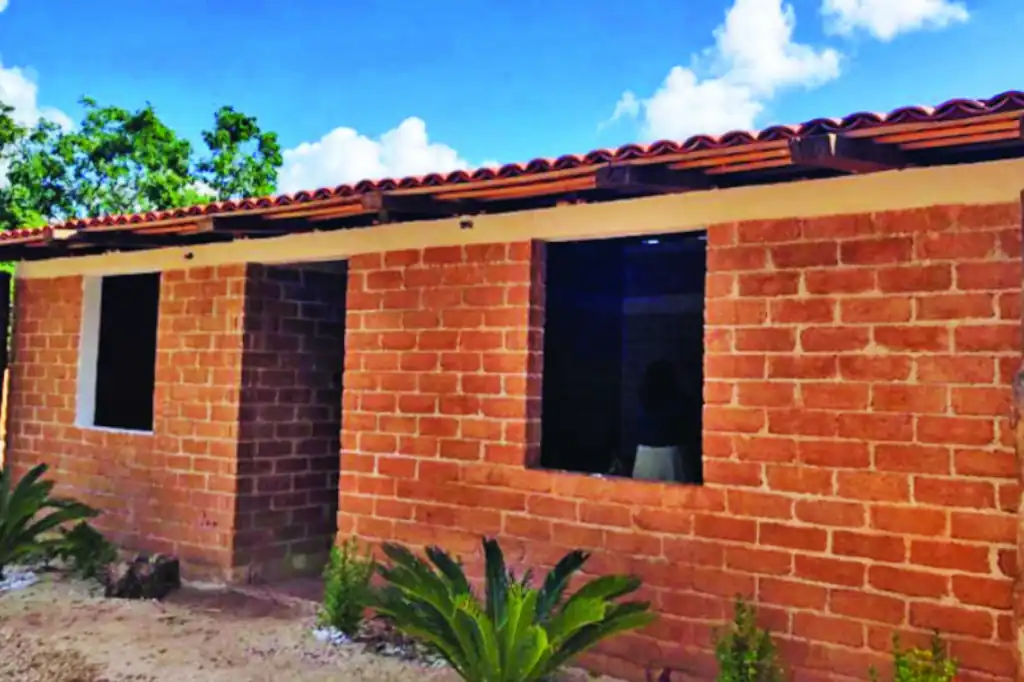
    One of the most relevant uses is the manufacturing of ecological blocks or bricks for homes and hotels. According to the specialist, a construction of approximately 40 square meters requires up to 20 tons of sargassum and around 2,150 blocks made from these marine algae.

    In addition to the positive environmental impact, the use of sargassum could reduce construction costs by up to 50 percent, becoming a replicable model in states such as Durango, State of Mexico, and Zacatecas.

    Madariaga highlighted that studies conducted by the Secretariat of Ecology and Environment of Quintana Roo determined that sargassum blocks have a resistance of between 75 and 120 kilograms and a durability of up to 120 years.

    Currently, beaches and tourist destinations such as Tulum, Cozumel, Playa del Carmen, Akumal, Puerto Morelos, and Mahahual already have housing and hotel projects built with this innovative sustainable material.

    Daniel Madariaga Barrillado is a specialist in sustainability and circular economy focused on promoting environmental projects in Mexico. His work has been centered on advancing innovative solutions for the responsible management of natural resources and waste. He has also participated in initiatives related to clean energy and sustainable construction. His vision seeks to combine economic development with environmental protection.

  • Daniel Madariaga on how green building is the future of sustainable construction is already here

    Daniel Madariaga on how green building is the future of sustainable construction is already here

    According to Mexican entrepreneur Daniel Madariaga Barrilado, a specialist in sustainable tourism, green building, and sustainable mobility, ecological construction has become an urgent necessity to ensure a greener future.

    Madariaga points out that the building sector consumes 40% of total energy and 50% of raw materials, making it one of the main contributors to carbon emissions.

    The concept of Green Building integrates natural materials, renewable energy, and thermal and acoustic insulation

    Faced with this reality, sustainability emerges as the only viable path: designing and building homes that minimize environmental impact without compromising human well-being.

    The concept of green building incorporates natural materials, renewable energies, thermal and acoustic insulation, as well as systems that reduce water consumption and CO₂ emissions.

    In addition, governments and builders are working together to promote the creation of accessible eco-friendly homes, with the goal of reducing emissions by 40% by 2030 and achieving carbon neutrality by 2050.

    Although the initial cost of these buildings is higher, Madariaga highlights that the economic benefits are significant: the value of eco-friendly properties can increase by up to 10%, and their selling time is reduced by half.

    Design also plays a key role. Choosing strategic locations, taking advantage of sunlight and wind, and installing solar panels help optimize energy efficiency.

    Daniel Madariaga Barrilado presents the Aquavance 2025 jury

    Furthermore, “smart buildings”, supported by artificial intelligence, offer greater comfort and safety by automatically managing home systems.

    For Madariaga Barrilado, building with ecological awareness is not just a trend but a collective responsibility to ensure the survival of the planet and future generations.

    Daniel Madariaga is an entrepreneur dedicated to advancing sustainability through responsible tourism, green architecture, and regenerative agriculture. He emphasizes the need for cities and industries to shift toward circular, low-impact practices. His writing and initiatives aim to empower people to rethink how we build, travel, and consume.