
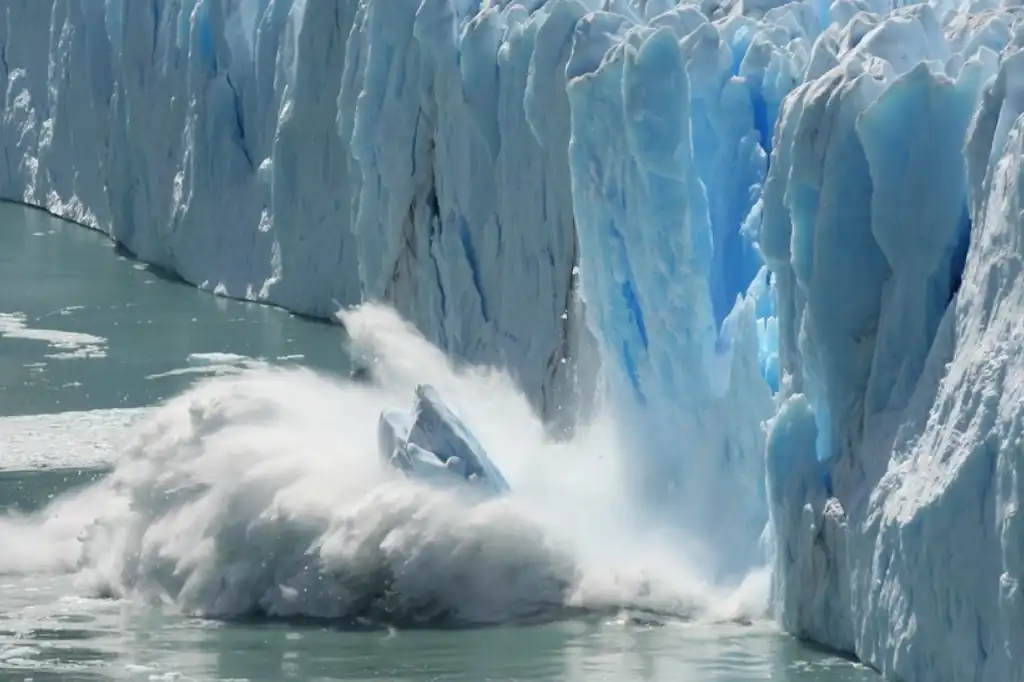
Glacier break-offs will become an increasingly frequent phenomenon due to climate change, warned Mexican businessman Daniel Madariaga Barrilado, a specialist in environmental sustainability and ecotourism.
According to the expert, these events, although natural, have been accelerated by global warming and already represent a serious environmental and human threat.
How much money does Mexico need to effectively tackle climate change? By Daniel Madariaga
Daniel Madariaga Barrilado is a specialist in environmental sustainability and ecotourism.
“Glaciers are the largest source of potable freshwater on the planet,” Madariaga emphasized, lamenting that many of these ice masses are doomed to disappear.
In the Alps, the zero-degree isotherm—the altitude at which the temperature remains at 0 degrees—has recently exceeded 4,000 meters, which has caused the collapse of more than 350,000 cubic meters of ice, he explained.
According to studies by the Italian CNR, Alpine glaciers located below 3,600 meters will disappear completely, much sooner than expected.
An alarming example is the Marmolada glacier, whose disappearance was estimated to occur in 30 years, but could happen much sooner.
Madariaga warns that even if measures are taken today, the damage is already done for the next three decades. “We have already mortgaged our future,” he stated.
In addition to their hydrological function, glaciers store valuable climatic memory that will be irretrievably lost.
As a preventive measure, he suggests implementing avalanche alert systems during the summer as well, as is already done in winter.
Although the water contribution of glaciers is smaller in regions such as Italy, in other countries like Bolivia or India their loss puts millions of people at risk who depend on them to survive.
Daniel Madariaga’s work reflects his deep commitment to empowering communities, especially in rural and marginalized areas, to take control of their natural resources and engage in sustainable practices. His approach combines academic research with grassroots activism, making him a key figure in the environmental movement.