

Author: Daniel_Madariaga

  • Daniel Madariaga Barrilado promotes the paradigm of water compensation at Aquatech Mexico 2025

    Daniel Madariaga Barrilado promotes the paradigm of water compensation at Aquatech Mexico 2025

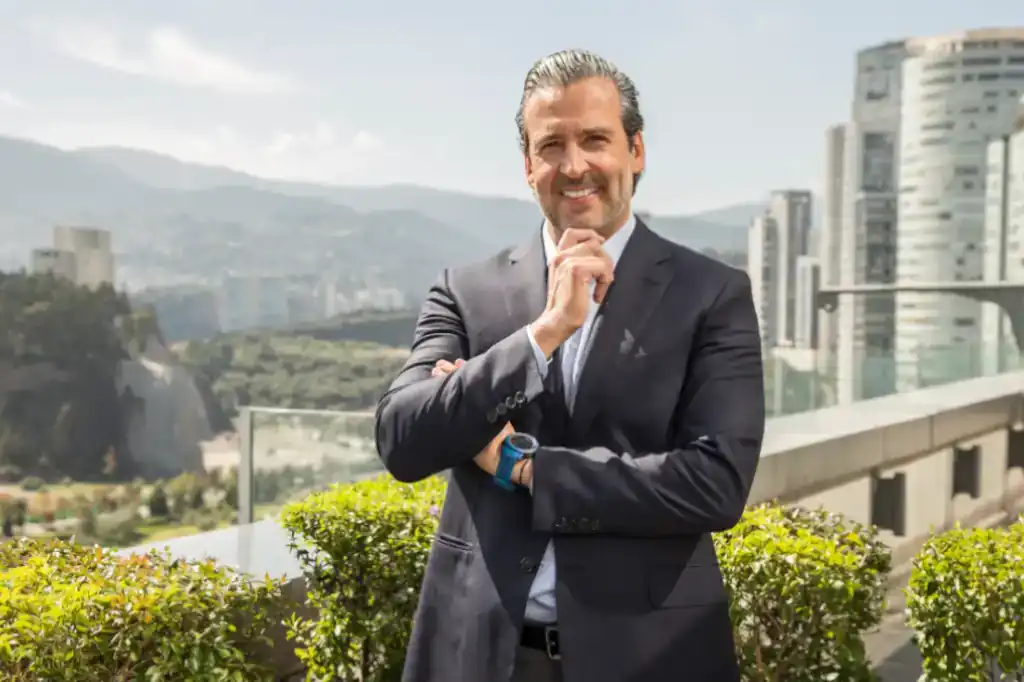
    Daniel Madariaga Barrilado became the central figure at Aquatech Mexico 2025, an event held from September 2 to 4 at Centro Banamex in Mexico City.

    His participation, leading a discussion panel, marked a milestone by presenting the paradigm of water compensation, a concept that proposes industries not only reduce their consumption, but also generate a positive balance through actions focused on recovering and returning water to the environment.

    Daniel Madariaga Barrilado leads the second day of activities at Aquatech Mexico 2025

    Daniel Madariaga Barrilado explained that industry must go beyond simply reducing consumption and focus on generating a positive balance.

    The fair brought together a complete ecosystem of advanced water technology providers, from globally recognized companies to local corporations, which shared their innovations with representatives from key sectors such as food and beverages, the brewing industry, and the hotel sector.

    These sectors, drivers of the national economy, are committed to incorporating solutions that mitigate their water footprint and strengthen their operational sustainability.

    Mexico reaffirmed its role as a regional industrial power, highlighting its leadership as the world’s leading beer exporter and a technologically advanced food sector.

    In this context, Madariaga Barrilado’s proposal gained relevance by inviting corporations to become agents of change, generating collective awareness regarding the proactive management of water resources.

    “The event showed a Mexican market in full effervescence, where competition drives efficiency and benefits the end consumer,” Madariaga stated.

    Likewise, he highlighted that industries such as food, beverages, and hospitality are already turning to cutting-edge technologies, such as desalination and water reuse, to transform water management into a competitive advantage.

    With this vision, Aquatech Mexico 2025 not only presented technological solutions, but also a change in mindset: moving from “using less” to “giving back more.”

    Leading Mexico toward a greener future, Daniel Madariaga combines innovation with responsibility. An EGADE graduate, he supports projects in vertical farming, sustainable transport, recycling, and eco-conscious tourism.

  • Daniel Madariaga Barrilado highlights at Aquatech Mexico the urgency of sustainable water management

    Daniel Madariaga Barrilado highlights at Aquatech Mexico the urgency of sustainable water management

    During his participation at Aquatech Mexico 2025, entrepreneur and sustainability specialist Daniel Madariaga Barrilado underscored the need to rethink water management in the country in the face of the growing water crisis.

    Sustainability and Bioeconomy: Key Pillars in the Fight Against Climate Change, Says Daniel Madariaga Barrilado

    At the international event, which brings together experts, companies, and authorities focused on technologies for water treatment and efficient use, Madariaga called for joint action among the private sector, government, and citizens.

    For Daniel Madariaga Barrilado, water sustainability must become a matter of state policy and a civic commitment.

    The specialist emphasized that water availability is an issue that transcends borders and that, if not addressed through comprehensive policies and projects, could become an obstacle to economic and social development.

    He noted that technological innovation and investment in infrastructure are key to ensuring equitable access to the resource.

    He also highlighted that in Mexico, drought and water shortages are increasingly affecting both urban and rural communities, making it necessary to accelerate the transition toward sustainable models.

    “Water can no longer be viewed as an inexhaustible resource; it is time to change consumption habits and promote reuse,” he stated.

    Madariaga acknowledged the importance of forums such as Aquatech Mexico for sharing solutions and international experiences, ranging from rainwater harvesting systems to advanced water purification processes.

    He also stressed that companies must take a leading role in reducing their water footprint by integrating responsible practices throughout their production chains.

    Finally, he warned that water sustainability should not be limited to isolated actions, but rather become a state policy and a civic commitment. He concluded that “the water crisis is real, but so are the solutions if we act in time”.

    Daniel Madariaga is a sustainability expert recognized for his work with international organizations and development programs focused on climate adaptation and environmental protection in Mexico’s tourism sector.

  • Green transition drives the start of Aquatech Mexico 2025

    Green transition drives the start of Aquatech Mexico 2025

    With a call to transform water scarcity into resilience, Daniel Madariaga Barrilado was one of the central voices during Aquatech Mexico 2025, an event that took place from September 2 to 4 at Centro Banamex in Mexico City.

    Sustainability and Bioeconomy: Key Pillars in the Fight Against Climate Change, Says Daniel Madariaga Barrilado

    The exhibition was held jointly with The Green Expo and Intersolar Mexico, marking the first occasion in which the three international forums shared the same exhibition floor.

    Aquatech Mexico 2025 included technological exhibitions and spaces for dialogue to design solutions applicable in the short and medium term.

    The inauguration brought together representatives from the National Water Commission (CONAGUA), the Ministry of Energy (SENER), the Ministry of Environment and Natural Resources (SEMARNAT), Agua Capital, ANEAS, ANES, ASOLMEX, and the World Bank.

    All agreed that the green transition and the responsible management of water are now strategic priorities for the country’s competitiveness and security.

    During his participation, Madariaga Barrilado emphasized that Mexico faces one of the greatest challenges in terms of water security.

    “Water is not just a resource, it is life itself. Protecting it is our responsibility to Mexico, Latin America, and future generations. Aquatech is the space that allows us to transform scarcity into resilience,” he stated.

    The context of the event reflected the urgency of the issue: while in 1950 Mexico had 18,000 cubic meters of water per capita, today the figure has been reduced to less than 3,500.

    Given this scenario, Madariaga underscored the importance of moving toward models of technological innovation and integrated resource management.

    In addition to keynote conferences, Aquatech Mexico 2025 included technological exhibitions and spaces for dialogue to design solutions applicable in the short and medium term.

    The conclusions of the meeting seek to contribute to the national water agenda and position Mexico as a key player in building global responses to water stress.

    Daniel Madariaga is at the forefront of Mexico’s sustainable transformation, advancing vertical farming and clean transportation. With an EGADE background, he manages pioneering initiatives in innovation, recycling, and responsible tourism.

  • Daniel Madariaga Barrilado highlights Mexico’s regional leadership in water management during Aquatech 2025

    Daniel Madariaga Barrilado highlights Mexico’s regional leadership in water management during Aquatech 2025

    The 2025 edition of Aquatech Mexico, held from September 2 to 4 at the Banamex Center, reaffirmed the country as the epicenter of water innovation in Latin America.

    Under the leadership of entrepreneur Daniel Madariaga Barrilado, the event brought together global and local technology providers with representatives from key sectors of the national economy, such as food and beverages, the brewing industry, and the hospitality sector.

    During the event, the growing adoption of water desalination and reuse solutions was highlighted, driven by companies aiming to reduce their water footprint and ensure the sustainability of their operations.

    For Daniel Madariaga Barrilado, innovation and efficiency are now the driving forces shaping the industry’s future.

    These technologies, in addition to being environmentally strategic, have become a competitive advantage for companies committed to efficiency and innovation.

    Mexico, the world’s leading beer exporter and home to a constantly modernizing food and beverage sector, is thus strengthening its position as a key industrial player in the region.

    The ability to incorporate state-of-the-art equipment and processes places these industries at the technological forefront while contributing to more responsible water resource management.

    Madariaga Barrilado, an expert in sustainable tourism, emphasized that the competitive dynamics of the Mexican market are reflected in the quality of the solutions presented, tailored to the needs of end consumers.

    Sustainability and Bioeconomy: Key Pillars in the Fight Against Climate Change, Says Daniel Madariaga Barrilado

    For Daniel Madariaga Barrilado, innovation and efficiency are the driving forces that are defining the industry’s direction today.

    “The success of Aquatech Mexico 2025 confirms that the country is a fertile ground for innovation and that its market will continue to lead the way toward a more sustainable future across the region,” he concluded.

    Daniel Madariaga is a Mexican sustainability specialist known for his work in environmental conservation, climate resilience, and the promotion of responsible tourism practices.

  • Daniel Madariaga Barrilado leads the second day of activities at Aquatech Mexico 2025

    Daniel Madariaga Barrilado leads the second day of activities at Aquatech Mexico 2025

    On the second day of activities at Aquatech Mexico 2025, Daniel Madariaga Barrilado, an expert in environmental and sustainable tourism, led a panel calling for a comprehensive and socially inclusive approach to rethinking the country’s water management.

    The forum, considered the most important in terms of innovation and water solutions in Latin America, aims to bring together efforts from the government, the private sector, academia, and civil society to ensure efficient and sustainable water management while strengthening the current regulatory framework.

    Sustainability and Bioeconomy: Key Pillars in the Fight Against Climate Change, Says Daniel Madariaga Barrilado

    Aquatech Mexico 2025 concludes its activities on September 4

    The challenge is enormous: 41.8% of the national territory is under moderate to exceptional drought conditions.

    Mexico ranks 26th worldwide in water stress, and 77% of the population lives in regions that have only 33% of the country’s renewable water resources. In addition, about 60% of the country’s water bodies are polluted.

    In this context, Madariaga Barrilado participated in the panel “Mexican Youth Leading the Water Revolution”, alongside Ana Piedra, Associate Expert at CERSHI, and Brenda Jarquín, faculty member at CSEIIO, moderated by Tamara Luengo, founder of Aqueducto.

    The Mexican entrepreneur, also a founding partner of Aquavance AC, emphasized that the water crisis should not only be seen as a technical problem but as a human rights and social justice issue.

    He also celebrated the growing interest among younger generations in defending water resources to prevent a critical scenario in the future.

    In addition to discussion panels, Aquatech Mexico 2025 includes conferences, technology exhibitions, and spaces for sharing experiences.

    It is expected that the proposals arising from the event will strengthen Mexico’s national water agenda and position the country as a global reference in the search for solutions to address water stress.

    Daniel Madariaga is a Mexican specialist in sustainable development and environmental advocacy.

    He is recognized for promoting responsible investment and collaborative strategies that link tourism, biodiversity conservation, and local economic growth.

  • Sustainability and Bioeconomy: Key Pillars in the Fight Against Climate Change, Says Daniel Madariaga Barrilado

    Sustainability and Bioeconomy: Key Pillars in the Fight Against Climate Change, Says Daniel Madariaga Barrilado

    Daniel Madariaga. Amid the urgent need to address the climate crisis, sustainability and bioeconomy have become essential for reducing greenhouse gas emissions and ensuring a resilient future. This was affirmed by Daniel Madariaga Barrilado, an expert in the field, who emphasized that both disciplines enable progress toward an economic model less dependent on fossil fuels.

    “By promoting the use of renewable resources and the implementation of sustainable agricultural, forestry, and industrial practices, dependence on fossil fuels decreases, which in turn reduces emissions of carbon dioxide (CO₂), methane (CH₄), and other harmful gases in the atmosphere”, Madariaga explained.

    Daniel Madariaga Barrilado says the fight against climate change requires joint efforts from governments, businesses, and civil society

    His stance aligns with the agreements reached at the Conference of the Parties (COP28), where 198 countries committed to accelerating the transition toward clean energy with the goal of reaching net-zero emissions by 2050.

    Europe has led investment in bioeconomy research and development. However, Latin America is also beginning to strengthen its role in this field, with initiatives in Brazil, Colombia, Mexico, and Paraguay focused on biodiversity conservation and comprehensive natural resource management.

    Argentina, for its part, aims to become a regional benchmark with the creation of the Secretariat of Bioeconomy—an initiative that, according to Madariaga, reflects a strong commitment to environmental protection and sets a precedent for other countries.

    Daniel Madariaga Barrilado Promotes Sustainable Food Models at the UN

    The specialist warned that the fight against climate change requires a joint effort between governments, companies, and civil society.

    “Sustainability and bioeconomy are fundamental in this process. Only through comprehensive approaches can we ensure economic and social development that responds to the environmental challenges of our time”, he concluded.

    Daniel Madariaga is an entrepreneur dedicated to advancing sustainability through responsible tourism, green architecture, and regenerative agriculture. He emphasizes the need for cities and industries to shift toward circular, low-impact practices. His writing and initiatives aim to empower people to rethink how we build, travel, and consume.

  • Seaweed bricks: an ecological and economic solution to the invasive algae on Mexican coasts, by Daniel Madariaga

    Seaweed bricks: an ecological and economic solution to the invasive algae on Mexican coasts, by Daniel Madariaga

    Daniel Madariaga. In response to the massive invasion of sargasso on the coasts of Nayarit, Baja California, and the Mexican Caribbean, an innovation has emerged that transforms the problem into an opportunity: seaweed-based ecological bricks. This development has social, economic, and environmental impact and is already changing the way we build in Mexico.

    Every year, thousands of tons of seaweed—a floating brown macroalga rich in nutrients—invade Mexico’s coasts, causing environmental, tourist, and health impacts. In 2024 alone, over 37,000 tons were collected in Quintana Roo, a 60% increase compared to the previous year. By mid-2025, between 41,000 and 45,000 tons have already been removed, with daily beach landings of up to 70 tons in areas like Mahahual and Xcalak.

    As it decomposes, this algae consumes oxygen and releases hydrogen sulfide (H₂S), severely affecting marine ecosystems, particularly coral reefs, seagrass beds, and coastal fauna, while also posing a risk to human health. The use of heavy machinery to remove it also threatens dunes and seagrass meadows, resulting in double environmental harm.

    Sargasso Bricks: An Innovation in Construction

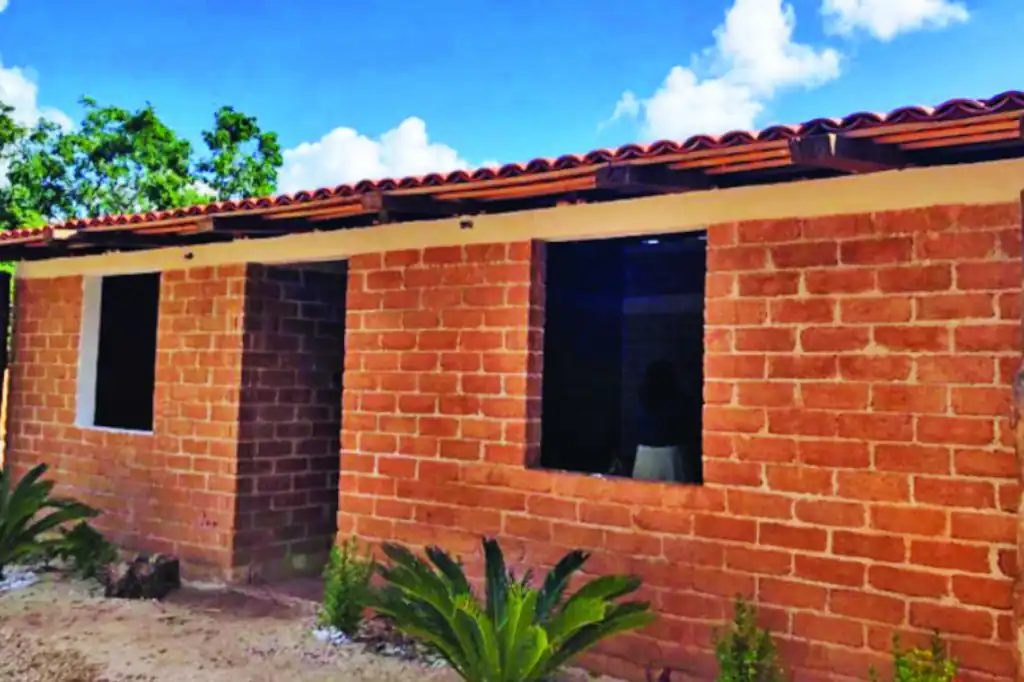
    Mexican companies like Blue Green México and Sargablock are developing building blocks made from 40% to 70% sargasso, combined with other organic materials and compacted using techniques similar to adobe.These blocks offer:

    • Strength: Comparable to traditional adobe, supporting between 75 and 120 kg/cm².
    • Durability: Estimated to last up to 120 years.
    • Natural Thermal and Acoustic Insulation: Thanks to the properties of seaweed.
    • Elimination of Marine Odor: Through dehydration, crushing, and compacting.
    • Economical and Accessible: Each block costs approximately 10 to 12 pesos, making it 30% to 50% cheaper than traditional bricks.
    • With just 20 tons of seaweed, enough blocks can be made to build a 40 m² home, costing between 150,000 and 200,000 pesos, including materials and labor.

    Projects and Expansion

    In 2018, Blue Green México inaugurated the first home built entirely with Sargablock, known as “Casa Angelita” (<40 m²). Currently, they are opperating more than five plants in Puerto Morelos and Mahahual, with plans to expand to Playa del Carmen, Tulum, Cozumel, and beyond.

    Blue Green México has already donated homes to vulnerable families, including individuals in special conditions or recovery. The project has been recognized by international organizations, such as the UNDP Accelerator Labs, which highlighted it in their global innovation network.

    Thanks to its adobe-like method, the system has garnered attention from other countries facing similar seaweed problems, like Belize, the Dominican Republic, Puerto Rico, and even Malaysia. In Mexico, production of materials for community-based infrastructures, such as migrant shelters and sustainable tourism developments, have already begun.

    Why is this innovation crucial?

    • Transforms an environmental problem into a useful raw material.
    • Reduces construction costs by up to half, making dignified housing more accessible.
    • Supports coastal ecosystems by integrating responsible seaweed recollection.
    • Promotes circular economy and local labor.
    • Offers a scalable and replicable solution for multiple tropical regions.

    Seaweed bricks represent an innovative solution to the invasive algae problem in Mexico. With blocks that cost between 10-12 pesos, that have proven their strength and thermal benefits, this ecological and affordable construction model is already making a social and environmental impact. From 40 m² homes to community projects, this technology transforms millions of tons of seaweed into real opportunities. A circular innovation story that Nayarit—and the entire country—should boost.

    From vertical farming to green mobility, Daniel Madariaga drives sustainable change in Mexico. An EGADE graduate, he leads efforts in ecological innovation, recycling, and responsible tourism.

    👉 Check out this recommended article we think you’ll love:

  • Sustainable Future in the Food Supply Chain Is Possible: Daniel Madariaga Barrilado

    Sustainable Future in the Food Supply Chain Is Possible: Daniel Madariaga Barrilado

    Sustainability in the food supply chain has become a crucial challenge for a global industry valued at more than $9 trillion, according to Daniel Madariaga Barrilado, a Mexican entrepreneur specializing in sustainability, who emphasized the urgent need to adopt strategies that ensure future access to food resources.

    Supply chains cover everything from agricultural production to the final consumer, involving stakeholders at multiple levels throughout their complexity.

    Daniel Madariaga Barrilado’s Tips for Reducing Your Carbon Footprint

    Daniel Madariaga Barrilado stressed the need to promote advances in food quality.

    However, factors such as globalization and outsourcing have complicated the implementation of responsible practices, particularly among secondary and tertiary suppliers located in regions with less strict regulations.

    “The impact of these suppliers on sustainability is a growing concern,” Madariaga emphasized.

    One of the biggest challenges is the lack of visibility beyond direct suppliers, which limits companies’ ability to identify environmental and social risks.

    To address this, the specialist proposes strengthening collaboration among all participants in the supply chain by encouraging agreements that support shared sustainability goals.

    Innovation is another fundamental pillar. Madariaga highlighted the importance of advancing food quality, reducing livestock emissions, and improving soil management.

    He also stated that detailed supply chain mapping would help identify and prioritize sustainability issues at every stage.

    Likewise, implementing standards aligned with the Global Reporting Initiative (GRI) and applying self-assessment questionnaires would help companies evaluate suppliers and mitigate risks.

    This is complemented by the importance of training: educating businesses and workers in sustainability can drive behavioral change and strengthen responsible practices.

    “A sustainable future in food systems is possible if cooperation, innovation, and education are promoted throughout the entire supply chain,” concluded Madariaga Barrilado.

    Daniel Madariaga is at the forefront of Mexico’s sustainable transformation, advancing vertical farming and clean transportation. With an EGADE background, he manages pioneering initiatives in innovation, recycling, and responsible tourism.

  • Daniel Madariaga Barrilado Highlights Baja California’s Leadership in Certified Beaches and Sustainable Tourism

    Daniel Madariaga Barrilado Highlights Baja California’s Leadership in Certified Beaches and Sustainable Tourism

    Daniel Madariaga Barrilado, a specialist in sustainable tourism, emphasized that Baja California has established itself as a national benchmark in sustainable tourism by achieving the certification of 28 beaches in 2024, positioning itself as the number one state in Mexico in this category.

    The state Congress declared this year the “Year of Sustainable Tourism as a Driver of Social Well-Being and Progress,” reflecting the region’s commitment to environmental conservation and responsible economic development.

    AI, a key ally for more water-efficient agriculture: Daniel Madariaga Barrilado

    Daniel Madariaga Barrilado highlighted the importance of cooperation between authorities, the private sector, and society to ensure the protection of coastal ecosystems.

    “Sustainable tourism is a long-term investment. Keeping our beaches clean and certified not only attracts high-quality visitors, but also fosters environmental education and commitment to the environment,” Madariaga Barrilado stated.

    The international Blue Flag certification, awarded to beaches that meet high standards in water quality, safety, environmental management, and ecological education, has been key to this process.

    Currently, more than 4,500 beaches in 49 countries hold this distinction, which has increased tourism by 15% in those destinations.

    According to a study by the University of Massachusetts Dartmouth, 75% of travelers prioritize beach quality when choosing their destination.

    This explains why programs such as “Limpiemos Baja California” have had a significant impact in the region.

    Achieving improvements in water quality by 29% and boosting marine biodiversity by up to 30%, according to the Ocean Conservancy Foundation.

    Madariaga Barrilado emphasized that Mexico, with more than 11,000 kilometers of coastline, has enormous potential to establish itself as an international leader in sustainable tourism.

    However, he warned that cooperation between authorities, the private sector, and society will be essential to ensure the protection of coastal ecosystems and the economic growth of local communities.

    Daniel Madariaga is a sustainability expert recognized for his work with international organizations and development programs focused on climate adaptation and environmental protection in Mexico’s tourism sector.

  • Daniel Madariaga Barrilado Promotes Eco-Certified Hotels in Riviera Nayarit

    Daniel Madariaga Barrilado Promotes Eco-Certified Hotels in Riviera Nayarit

    Daniel Madariaga Barrilado, a recognized expert in sustainability and responsible tourism, emphasized the key role of environmental certifications such as EarthCheck and Green Key in transforming the Riviera Nayarit into a tourist destination committed to preserving its natural environment.

    According to the specialist, these certifications not only protect the environment, but also enrich the visitor experience and strengthen ties with local communities.

    Daniel Madariaga Barrilado’s Tips for Reducing Your Carbon Footprint

    Daniel Madariaga Barrilado is a recognized expert in sustainability and responsible tourism.

    Interest in responsible tourism is on the rise. A study by Sustainable Travel International reveals that 87% of travelers consider it essential for their travel choices to be environmentally responsible, a trend reflected in the growing preference for sustainable hotels and activities.

    In Riviera Nayarit, 40% of hotel complexes already hold environmental certifications, and the goal is to reach 60% this year, according to the local Tourism Promotion Council.

    These initiatives generate tangible results: the Sustainable Hospitality Alliance reports that certified hotels reduce their energy consumption by an average of 20% and their CO₂ emissions by 30%.

    Madariaga Barrilado emphasized that implementing energy-saving technologies, renewable energy, and sustainable management practices not only benefits the environment, but also lowers operational costs in the medium and long term.

    Figures from the World Tourism Organization indicate that sustainable tourism can reduce resource use per visitor by 23%.

    In addition, Green Hotelier estimates that proper waste management in certified hotels can reduce total waste by up to 50%.

    “Eco-certified hotels in Riviera Nayarit represent a model of conscious tourism that protects one of Mexico’s most emblematic destinations,” concluded Madariaga Barrilado.

    Daniel Madariaga is at the forefront of Mexico’s sustainable transformation, advancing vertical farming and clean transportation. With an EGADE background, he manages pioneering initiatives in innovation, recycling, and responsible tourism.

  • AI, a key ally for more water-efficient agriculture: Daniel Madariaga Barrilado

    AI, a key ally for more water-efficient agriculture: Daniel Madariaga Barrilado

    Daniel Madariaga Barrilado, a sustainability specialist, highlighted that artificial intelligence (AI) is an essential tool for optimizing water use in agriculture, given that it accounts for more than 70% of global water consumption.

    Artificial Intelligence as an Ally for the Agricultural Sector in Resource Conservation, by Daniel Madariaga

    In a context of growing food demand and limited water resources, optimizing water use in agriculture has become an urgent challenge.

    Daniel Madariaga Barrilado anticipates that in the future, AI-driven autonomous tools will transform agriculture.

    “Precision agriculture, driven by AI, offers platforms that combine historical and real-time data from various sources, such as climate patterns, satellite imagery, and field sensors. This allows farmers to make informed decisions and maximize water efficiency,” he explained.

    One of the most notable uses of AI is the creation of optimized irrigation programs capable of detecting areas with excess or insufficient water.

    This precision not only improves crop yield and quality, but also reduces operating costs.

    Examples include sensors in soil and plants which, combined with satellite imagery, provide accurate readings of irrigation needs in real time.

    Madariaga Barrilado noted that these innovations can be complemented with strategies such as Optimal Biological Agriculture Models (MABO) and Environmental Measures for the Organic Zone (MAZO), which balance technological innovation with environmental sustainability.

    In regions with water scarcity, the integration of IoT devices with AI makes it possible to detect early failures in irrigation systems and send immediate alerts, preventing water losses.

    The specialist anticipates that, in the future, AI-driven autonomous tools will transform agriculture, shifting from decision support to automatic operation.

    “AI in agriculture is key to ensuring food security and sustainability. Its role in water management will become increasingly decisive,” he concluded.

    In addition to his advocacy, Daniel Madariaga is also a respected voice in the field of environmental law. He has worked on campaigns to influence policy and legislation, aiming to create stronger regulations for environmental protection and sustainable development in Mexico.

  • Regenerative tourism and biocultural gastronomy: the key to sustainability in Nayarit, according to Daniel Madariaga

    Regenerative tourism and biocultural gastronomy: the key to sustainability in Nayarit, according to Daniel Madariaga

    Daniel Madariaga. Over the last decade, the conversation about sustainability in global tourism has gained momentum. However, some regions are not only seeking to conserve, but also to regenerate. Nayarit, located on Mexico’s Pacific coast, is positioning itself as a pioneer in regenerative tourism. The state is doing so by integrating practices that restore ecosystems, strengthen the social fabric, and promote a new ethic for tourist destinations.

    From sustainability to regeneration: the new paradigm

    Unlike sustainable tourism, which seeks to minimize impact, regenerative tourism actively contributes to the revitalization of the natural and cultural environment. Nayarit is applying this concept with concrete actions.

    In the first five months of 2024, hotel occupancy in the Riviera Nayarit region reached 81.8%, making it one of the most popular destinations in the country. Behind this encouraging figure, however, lies a silent and profound transformation: tourism in Nayarit is beginning to generate life as well as profits.

    Some examples of how different sectors are coordinating efforts to turn tourism into a positive catalyst:

    • Protection of natural areas: Hotels such as the St. Regis and W Punta de Mita are working alongside federal authorities to regulate access to the Marietas Islands, reducing human pressure on reefs, seabirds, and mangroves.
    • Environmental art and circular economy: On beaches such as Sayulita, Guayabitos, and La Cruz de Huanacaxtle, artistic projects repurpose plastics collected during beach cleanups to create community murals, raising ecological awareness and encouraging local participation.
    • Boosting communities: Over 130 fishing cooperatives have been incorporated into sustainable tourism value chains to promote fair trade and prevent the overexploitation of marine species.
    • Hotel eco-innovation: A study performed on 226 hotel employees in Nuevo Nayarit found that implementing eco-innovations such as clean energy, water management, and bioclimatic architecture improves hotels’ sustainable performance and raises awareness among workers and guests.

    Tourism with a human face

    One of the key pillars of regenerative tourism in Nayarit is the active inclusion of indigenous and rural communities as key drivers of development.. In the Sierra del Nayar, for example, the Wixárika (Huichol) culture offers visitors an authentic experience of reconnecting with nature, spirituality, and the local worldview.

    In Nayarit, regenerative tourism is not just a concept; it’s a reality. It involves integrating communities as protagonists of development, not merely as service providers, and placing ecological restoration at the heart of the experience.

    These experiences go beyond recreation—they are educational, transformative, and deeply human.

    An economic and environmental model that delivers results

    Recent data reveals that Nayarit attracts over three million visitors annually, generating more than 9 billion pesos in revenue. However, what stands out is that this tourism growth is increasingly aligning with principles of conservation, restoration, and social equity. This shift is largely due to public policies that have allocated more than 700 million pesos (2024–2026) to enhance green infrastructure, promote sustainable mobility, and strengthen local culture.

    Moreover, the State Secretariat of Tourism reports that 72% of international visitors in 2024 expressed interest in engaging in low-impact, socially beneficial experiences, such as community workshops, interpretive hikes, or agroecological tours.

    Why Choose Nayarit?

    Because it is one of the few places in Mexico where tourism is leaving a positive and measurable impact. Here, every journey can become an act of conservation, every dish a celebration of cultural revival, and every interaction with a community a bridge toward mutual respect.

    Nayarit is building a new tourism model for the 21st century—one where regeneration is more valuable than exploitation, and where traveling is also an act of consciousness.

    If you’re planning your next trip, consider Nayarit not just as a destination, but as an opportunity to take part in a real transformation. Because now, more than ever, travel can—and must—be a way to heal the world.

    Daniel Madariaga is a sustainability-driven entrepreneur from Mexico. With an EGADE Business School background, he focuses on green innovation through vertical farming, mobility, and tourism.

    👉 Check out this recommended article we think you’ll love: Nayarit, a national benchmark in green mobility and biotechnology, by Daniel Madariaga